Refrigerator Troubleshooting
& Repair Guides
Find answers to common refrigerator problems, understand how your refrigerator works, and learn what may be causing cooling, temperature, ice maker, water, noise, and electrical issues. Explore troubleshooting guides, error codes, maintenance tips, and technical insights from appliance repair professionals.
On This Page
- How a Refrigerator Works
- Sealed Refrigeration System
- Airflow & Cold-Air Distribution
- Automatic Defrost System
- Temperature Control & Sensors
- Condenser Airflow & Heat Removal
- Electrical & Control System
- Doors, Gaskets & Air Infiltration
- Ice Maker & Water System
- Common Refrigerator Problems
- Understanding Error Codes
- Repair or Replace?
- Refrigerator Maintenance
- Troubleshooting Overview
Understanding Your Refrigerator: How It Works and Why Problems Occur
A refrigerator may seem like a simple appliance: you put food inside, set the temperature, and the interior stays cold. Behind that process, however, several mechanical, electrical, refrigeration, and airflow systems must work together continuously.
The refrigerator needs to remove heat from the cabinet, release that heat into the surrounding room, circulate cold air, control temperatures, manage frost and moisture, and respond to changing conditions every time a door is opened.
A problem with any one of these systems can affect the entire cooling process.
Understanding how the major systems work can also make refrigerator symptoms easier to interpret. A freezer that stays cold while the refrigerator compartment becomes warm, for example, points toward a different group of possible problems than a refrigerator where both compartments gradually lose cooling.
This guide explains the major systems inside a household refrigerator, how they interact, and why common refrigerator problems develop.
How a Refrigerator Works
A refrigerator does not create cold. It removes heat from inside the appliance and transfers that heat into the surrounding room.
Most household refrigerators accomplish this with a sealed refrigeration system containing refrigerant.
The basic refrigeration cycle is:
Compressor → Condenser → Metering Device → Evaporator → Compressor
The compressor circulates refrigerant through the system. The condenser releases heat, while the evaporator absorbs heat from inside the refrigerator.
But the refrigeration cycle alone is not enough.
Cold air must be moved through the appliance, frost must be removed from the evaporator, temperatures must be monitored, and the refrigerator must decide when the compressor, fans, heaters, and other components should operate.
For the refrigerator to maintain stable temperatures, all of these processes need to work together.
A refrigerator can therefore have a functioning compressor and still fail to cool correctly if, for example, cold air cannot circulate through the cabinet.
Let’s look at the major systems separately.
1. The Sealed Refrigeration System
The sealed system is responsible for transferring heat from inside the refrigerator to the surrounding environment.
Its main components typically include:
- compressor
- condenser
- evaporator
- refrigerant
- capillary tube or another metering device
- connecting refrigerant tubing
Refrigerant circulates through these components in a closed loop, changing pressure and temperature as it moves through the system.
The Compressor
The compressor provides the force that moves refrigerant through the refrigeration circuit.
It receives low-pressure refrigerant vapor returning from the evaporator, compresses it, and sends high-pressure refrigerant toward the condenser.
Depending on refrigerator design and cooling demand, the compressor may cycle on and off or operate at different speeds.
The Condenser
The condenser is where heat leaves the refrigeration system.
Hot refrigerant coming from the compressor passes through the condenser, where heat is transferred to the surrounding air.
This is why some areas around a refrigerator can feel warm during normal operation.
The Evaporator
After passing through the metering device, refrigerant enters the evaporator at much lower pressure.
As refrigerant moves through the evaporator, it absorbs heat from the surrounding air.
The evaporator therefore becomes very cold.
An evaporator fan typically moves air across these cold coils so that the cooled air can be distributed through the appliance.
The basic process is:
Heat inside refrigerator → Evaporator → Refrigerant → Compressor → Condenser → Heat released into room
A problem anywhere in this cycle can reduce cooling performance.
However, poor cooling does not automatically mean the compressor or sealed system has failed. Airflow, defrost, sensor, fan, and electrical problems can produce similar symptoms.
2. Airflow and Cold-Air Distribution
Producing cold temperatures at the evaporator is only part of refrigerator operation.
That cold air must reach the food compartments.
In many refrigerators, an evaporator fan pulls air across the evaporator coils and circulates it through vents and ducts.
A simplified airflow path might look like this:
Evaporator → Evaporator Fan → Air Ducts → Freezer & Refrigerator Compartments → Return Air Path → Evaporator
Exact airflow designs vary considerably.
Some refrigerators use a single evaporator to cool both compartments. Others use multiple evaporators, separate fans, electronic dampers, or independently controlled temperature zones.
Regardless of design, restricted airflow can create major temperature problems.
What can interfere with refrigerator airflow?
Common causes include:
- food blocking air vents
- excessive frost on the evaporator
- ice inside an air duct
- failed evaporator fan
- damaged fan blade
- malfunctioning air damper
- blocked return-air passages
- improperly loaded shelves or compartments
Airflow problems can create an especially confusing symptom: the freezer may remain cold while the refrigerator compartment becomes too warm.
In that situation, the appliance may still be producing cold air, but the air is not being distributed correctly.
This distinction is important because it can prevent an airflow problem from being mistaken for a sealed-system failure.
Related guide: Refrigerator Not Cooling? Common Causes and What to Check →
3. The Automatic Defrost System
Whenever warm, humid air enters the refrigerator, some of that moisture eventually reaches the cold evaporator.
Because the evaporator operates below freezing, moisture forms frost on the coil.
A small amount of frost is normal.
The problem occurs when frost continues accumulating.
Without a way to remove it, the evaporator could eventually become covered in ice, blocking the airflow needed to cool the refrigerator.
Frost-free refrigerators solve this with an automatic defrost system.
Depending on the model, the system may include:
- defrost heater
- evaporator temperature sensor or thermistor
- defrost thermostat
- thermal fuse
- control board
- defrost timer on some older refrigerators
During defrost, normal cooling is temporarily interrupted and the heater warms the evaporator enough to melt accumulated frost.
The water then flows into a drain beneath the evaporator.
From there, it normally travels through a drain tube to a pan near the bottom of the refrigerator, where it eventually evaporates.
What happens when defrost fails?
A defrost failure often develops gradually.
The refrigerator may initially appear to work normally. As more frost accumulates, however, airflow through the evaporator becomes increasingly restricted.
Temperatures may begin rising even though the compressor continues to run.
Eventually, a thick layer of frost or ice can significantly reduce or completely block airflow.
This is one reason the pattern and location of frost can provide useful diagnostic information.
Related guide: Refrigerator Not Defrosting? Common Causes Explained →
4. Temperature Control and Sensors
A refrigerator needs to know when cooling is required and when the desired temperature has been reached.
Older appliances often use mechanical temperature controls. Modern refrigerators typically rely on electronic sensors called thermistors together with one or more control boards.
Sensors may monitor temperatures in several locations, including:
- refrigerator compartment
- freezer compartment
- evaporator
- ice maker
- pantry or temperature-controlled drawers
- ambient room area
The control system interprets this information and decides how the refrigerator should operate.
Depending on the design, it may control:
- compressor operation
- compressor speed
- evaporator fans
- condenser fan
- air dampers
- defrost cycles
- heaters
- ice maker functions
This means the temperature displayed on the control panel is only one part of a much larger control process.
If a sensor provides inaccurate information, the refrigerator may operate incorrectly even though the mechanical cooling components are capable of working normally.
For example, incorrect temperature information can contribute to excessive cooling, insufficient cooling, unusual cycling, or temperature-related error codes.
5. Condenser Airflow and Heat Removal
All of the heat absorbed inside the refrigerator eventually has to go somewhere.
That heat is released around the condenser.
On many refrigerators, a condenser fan moves room air through the machine compartment and across the condenser and compressor.
A typical heat-removal path is:
Heat from food compartment → Evaporator → Refrigerant → Condenser → Room air
If the refrigerator cannot release heat efficiently, the refrigeration system has to work harder.
Possible restrictions include:
- dust and debris around accessible condenser coils
- pet hair
- blocked ventilation openings
- failed condenser fan
- objects restricting airflow around the refrigerator
Poor condenser airflow can contribute to longer run times, higher operating temperatures, reduced efficiency, and poor cooling performance.
The exact condenser design varies between refrigerators. Some coils are accessible for cleaning, while others are integrated into the cabinet and require little or no routine cleaning.
For that reason, maintenance should always take the refrigerator’s specific design into account.
6. The Electrical and Control System
Modern refrigerators are electronically controlled appliances.
Even a basic cooling cycle may depend on information passing between sensors, switches, circuit boards, motors, and other electrical components.
Depending on the refrigerator, the control system can include:
- main control board
- inverter board
- user interface
- thermistors
- relays
- door switches
- fan motors
- wiring harnesses
- compressor start components
- air damper motor
- water valves
- ice maker electronics
The main control board acts as a decision-making center.
It receives information from sensors and switches and then sends commands to the components needed for cooling, defrosting, airflow, ice production, and other functions.
Modern variable-speed compressors add another layer to this process.
Rather than simply switching on and off, an inverter-driven compressor may operate at different speeds depending on cooling demand.
Because of this interaction between electronics and mechanical components, a component that does not run is not necessarily defective itself.
For example, a non-running compressor could involve the compressor, but it could also involve its inverter, start circuit, wiring, power supply, sensor input, or control board.
Electrical testing is often necessary to separate the failed component from the system controlling it.
7. Doors, Gaskets and Warm-Air Infiltration
The refrigerator cabinet needs to remain isolated from the warm, humid air in the room.
Door gaskets help create that barrier.
Every time a refrigerator door opens, warm air enters the cabinet. The appliance then has to remove the additional heat and moisture.
Normal door use is built into refrigerator operation.
A door that does not seal properly, however, can allow warm air to enter continuously.
Common reasons include:
- torn or distorted door gasket
- dirty gasket surface
- food preventing the door from closing
- misaligned door
- worn hinge
- damaged door-closing mechanism
- refrigerator not properly leveled
Air leakage can create more than a simple temperature problem.
The additional moisture may contribute to condensation, frost, ice accumulation, and longer compressor run times.
A refrigerator may therefore appear to have a cooling or defrost problem when the underlying issue begins with a door that is not closing correctly.
8. Ice Maker and Water System
Refrigerators equipped with water dispensers and automatic ice makers contain another group of components that operate alongside the cooling system.
A typical water path looks approximately like this:
Household Water Supply → Inlet Valve → Water Filter → Internal Tubing → Dispenser / Ice Maker
Depending on the model, the system may contain:
- water inlet valve
- water filter
- filter housing
- water reservoir
- internal tubing
- dispenser assembly
- ice maker
- fill tube
- ice bin sensors or switches
The ice maker also depends on temperature.
If the freezer or ice maker compartment is too warm, the refrigerator may continue keeping food cold enough to appear functional while ice production slows or stops completely.
For this reason, an ice maker that stops working does not necessarily have a failed ice maker assembly.
Water leaks require similar care during diagnosis.
Water can originate from the supply system, dispenser, ice maker, filter, tubing, or even the refrigerator’s defrost drain.
Where and when the water appears often provides the most useful clue.
Related guide: Refrigerator Ice Maker Not Working? What to Check →
How Common Refrigerator Problems Develop
Most refrigerator symptoms can be traced back to a few basic requirements.
The appliance must:
- remove heat from the cabinet
- circulate cold air
- monitor and control temperature
- prevent excessive frost
- release heat outside the cabinet
- keep warm, humid room air from entering unnecessarily
When one of these processes is interrupted, the resulting symptom can help narrow down which system should be investigated.
The important question is often not simply “Is the refrigerator cooling?” but rather how, where, and under what conditions the cooling problem occurs.
Refrigerator Not Cooling
“Not cooling” can describe several different conditions.
For example:
- refrigerator compartment is warm but freezer is cold
- both compartments are too warm
- refrigerator cools only occasionally
- temperature gradually rises over several days
- compressor runs almost continuously
- compressor does not appear to run
- refrigerator cools, but not enough
These symptoms do not all point toward the same failure.
A cold freezer combined with a warm fresh-food compartment can suggest an airflow or damper problem.
If both compartments are warm, the diagnostic path may instead involve the compressor, fans, condenser airflow, control system, or sealed refrigeration system.
If cooling gradually deteriorates while frost accumulates around the evaporator, the defrost system becomes more significant.
This is why replacing a compressor, sensor, fan, or control board based only on the phrase “not cooling” is unreliable.
The cooling pattern needs to be understood first.
Detailed troubleshooting: Refrigerator Not Cooling? Common Causes and What to Check →
Refrigerator Temperature Is Too Warm or Inconsistent
Some refrigerators still produce cold air but cannot maintain stable temperatures.
You might notice that food feels warmer than usual, temperatures fluctuate, or one section of the refrigerator is significantly colder than another.
Before assuming a component has failed, consider operating conditions.
Temperature can be affected by:
- blocked air vents
- frequent door opening
- large amounts of warm food added at once
- improper control settings
- food packed too tightly
- poor door sealing
- unusually high room temperature
If operating conditions are normal, inconsistent temperatures may point toward airflow, fan, sensor, damper, defrost, or control problems.
The difference between the freezer and refrigerator temperatures is especially useful.
Knowing which compartment is affected can eliminate several unrelated causes before any components are tested.
Refrigerator Leaking Water
Water beneath or inside a refrigerator can come from several unrelated systems.
Common sources include:
- clogged defrost drain
- frozen drain opening
- leaking water supply line
- loose water connection
- damaged water inlet valve
- leaking filter or filter housing
- cracked internal tubing
- ice maker fill problem
- dispenser leak
The first step is usually determining where the water originates.
For example, water appearing inside the freezer below the evaporator area may suggest a drainage problem.
Water near the rear of the refrigerator may point toward the household supply connection or inlet valve.
A leak that appears only when the dispenser operates suggests a different path again.
Identifying the location and timing of the leak is often more useful than the amount of water present.
Related guide: Refrigerator Leaking Water? Common Sources and What to Check →
Refrigerator Making Noise
A refrigerator is never completely silent.
During normal operation you may hear fans, refrigerant movement, compressor operation, water valves, ice dropping into the bin, and materials expanding or contracting as temperatures change.
Many of these sounds are normal.
Unusual noises, however, can provide useful diagnostic clues.
Where is the noise coming from?
Inside the freezer — the evaporator fan or ice buildup around the fan may be involved.
Near the bottom or rear — the condenser fan, compressor, or machine compartment may be the source.
Around the ice maker — normal ice production, a fill problem, or an ice maker mechanism may be responsible.
The type of sound matters too.
Buzzing, clicking, rattling, grinding, scraping, and humming can each occur for different reasons.
Sound alone cannot reliably identify a failed component, but its type, location, and timing can narrow the diagnosis considerably.
Related guide: Refrigerator Making Noise? What Different Sounds May Mean →
Refrigerator Has Excessive Frost or Ice
Not all frost indicates the same problem.
Frost concentrated on the evaporator can point toward different conditions than frost around a door opening or ice forming beneath a freezer drawer.
Possible causes include:
- defrost system failure
- door left partially open
- damaged door gasket
- blocked air passages
- frozen defrost drain
- humid room air entering the cabinet
The frost pattern matters.
A heavily frosted evaporator hidden behind the freezer panel can restrict airflow and eventually affect cooling throughout the appliance.
Frost around a door, on the other hand, may be more closely related to air leakage.
Before replacing defrost components, it is important to determine where the frost is forming and why moisture is reaching that area.
Ice Maker Not Making Ice
Automatic ice production requires both water and sufficiently cold temperatures.
A typical ice-making sequence depends on several conditions:
Freezer reaches required temperature → Ice maker cycles → Water valve opens → Mold fills → Water freezes → Ice is harvested
A problem at any point can stop production.
Possible causes include:
- freezer temperature too high
- water supply turned off
- low water pressure
- clogged water filter
- frozen fill tube
- failed inlet valve
- ice maker sensor or switch problem
- mechanical or electrical failure inside the ice maker
One important diagnostic clue is whether the refrigerator is otherwise cooling correctly.
If cooling performance has also declined, the ice maker may simply be one of the first systems to show the effect.
If temperatures are normal, the water and ice-making components become more likely areas to investigate.
Detailed troubleshooting: Refrigerator Ice Maker Not Working? Common Causes Explained →
Understanding Refrigerator Error Codes
Many modern refrigerators monitor sensors, fans, communications, and other electronic functions.
When the control system detects an abnormal condition, it may display an error or fault code.
Codes can relate to:
- temperature sensors
- evaporator fan
- condenser fan
- defrost system
- ice maker
- communication between control boards
- compressor or inverter
- door sensors
- electrical faults
An error code can significantly narrow the diagnostic path.
It does not necessarily identify the failed part.
A fan-related error, for example, might be caused by a failed motor, but it could also result from ice physically preventing the fan from turning, damaged wiring, a loose connector, or a control problem.
Error codes should therefore be interpreted as diagnostic clues, not automatic instructions to replace a particular component.
Repair or Replace Your Refrigerator?
A refrigerator problem does not automatically mean the appliance should be replaced.
Likewise, the fact that a refrigerator can technically be repaired does not always mean repair is the most practical choice.
Several factors should be considered:
- age of the refrigerator
- overall appliance condition
- type of failure
- repair cost
- previous repair history
- replacement-part availability
- features and replacement value of the appliance
A failed fan, sensor, valve, relay, or other replaceable component may make repair relatively straightforward.
A major sealed-system problem can require more specialized work and should be evaluated differently.
Before making the decision, the most useful information is an accurate diagnosis.
Without knowing what has actually failed, comparing the cost of repair with replacement is largely guesswork.
Basic Refrigerator Maintenance Can Prevent Many Problems
Refrigerators require relatively little routine maintenance, but a few habits can help prevent avoidable cooling, airflow, and water problems.
Keep air vents inside the refrigerator unobstructed.
Do not pack food so tightly that cold air cannot circulate between compartments.
Check that doors close completely and keep gasket surfaces clean.
Where the refrigerator design uses accessible condenser coils, inspect and clean them according to the manufacturer’s recommendations.
Water filters should also be replaced at appropriate intervals. A heavily restricted filter can reduce dispenser flow and affect ice production.
Pay attention to changes in normal operation.
A new fan noise, unusually long compressor run time, repeated frost buildup, rising temperatures, or water appearing where it normally does not can be an early indication of a developing problem.
Addressing the cause early may prevent secondary problems.
Understanding the System Makes Refrigerator Troubleshooting Easier
A refrigerator is easier to diagnose when it is viewed as several connected systems rather than simply an appliance that “gets cold.”
The sealed refrigeration system transfers heat.
The evaporator and airflow system distribute cooling.
The defrost system prevents frost from blocking the evaporator.
The condenser system releases heat into the room.
The temperature sensors and electronic controls coordinate operation.
The doors and gaskets separate the cold cabinet from warm, humid room air.
And the water and ice system handles dispensing and automatic ice production.
When something goes wrong, the symptom often reveals which of these systems deserves attention first.
Understanding those relationships makes it easier to distinguish a simple airflow or operating issue from a problem that requires electrical testing, component-level diagnosis, or sealed-system service.
On This Page
- How a Refrigerator Works
- Sealed Refrigeration System
- Airflow & Cold-Air Distribution
- Automatic Defrost System
- Temperature Control & Sensors
- Condenser Airflow & Heat Removal
- Electrical & Control System
- Doors, Gaskets & Air Infiltration
- Ice Maker & Water System
- Common Refrigerator Problems
- Understanding Error Codes
- Repair or Replace?
- Refrigerator Maintenance
- Troubleshooting Overview
Refrigerator Repair Throughout the Denver Metro Area
Need Professional Refrigerator Repair?
If your refrigerator isn’t cooling properly, temperatures keep rising, food isn’t staying cold, or the unit runs constantly, the problem may require professional diagnostics.
Mint Appliance Repair provides professional refrigerator diagnosis and repair throughout the Denver metro area.
Same-day appointments
Upfront pricing
90-day warranty on parts and labor
Denver metro experts
BROWSE APPLIANCE REPAIR GUIDES
REFRIGERATOR
Cooling problems, ice makers, compressors, defrost systems & error codes
WASHER
Drainage, spinning, leaks, vibration & electronic faults
DRYER
Heating problems, airflow, thermostats, belts & sensors
OVEN & RANGE
Heating elements, igniters, temperature issues & control boards
DISHWASHER
Drainage, cleaning, leaks, pumps & heating problems
ERROR CODES
Error codes, fault codes & diagnostic information
APPLIANCE ERROR CODES & DIAGNOSTICS



TROUBLESHOOTING BY PROBLEM
- Refrigerator Not Cooling
- Dishwasher Not Draining
- Washer Won’t Drain
- Appliance Making Noise
- Dryer Not Heating
- Appliance Leaking Water
- Oven Not Heating
- Appliance Won’t Turn On
FEATURED REPAIR GUIDES
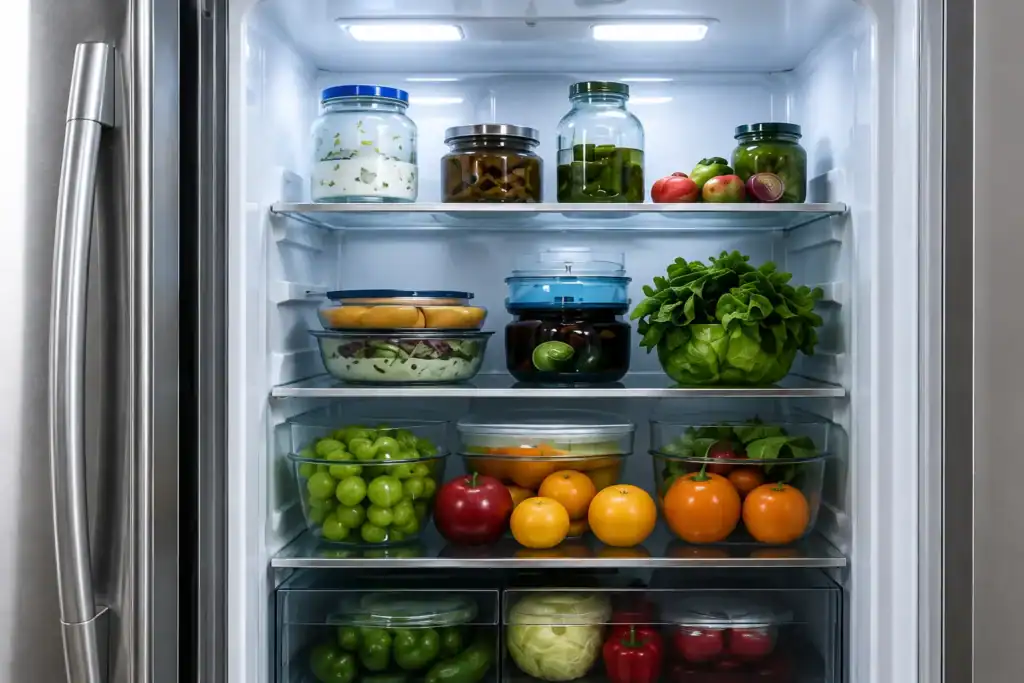
Why Is My Refrigerator Not Cooling?
Common causes include dirty condenser coils, failed fans, defrost problems, sensors, and sealed-system failures.
Why Won’t My Washer Drain?
Learn what causes drainage issues and how to diagnose pumps, hoses, and filters.
Why Is My Dryer Not Heating?
Find out the most common reasons why your dryer doesn’t heat and how to fix them.
Oven Not Heating? Top 6 Causes
From bad igniters to control boards—here’s how to identify the problem.