
Why Won’t My Washer Drain? Common Causes & What to Check
When a washer won’t drain, the problem may be as simple as a clogged filter or drain hose, or it may involve the drain pump, lid or door lock, pressure sensor, wiring, or electronic controls.
This guide explains how a washer drain system works, the most common reasons water remains in the tub, what you can safely check yourself, and when professional diagnosis may be necessary.
On This Page
- Quick Checks Before Troubleshooting
- Clogged Drain Pump Filter or Coin Trap
- Blocked, Kinked or Incorrectly Installed Drain Hose
- Foreign Object Blocking the Drain Pump
- Failed or Weak Drain Pump
- Lid Switch or Door Lock Problems
- Water-Level Pressure Sensor & Pressure Hose Problems
- Wiring, Connectors & Electrical Problems
- Control Board & Drain Circuit Problems
- Excessive Suds & Detergent Problems
- Household Drain or Standpipe Problems
- Washer Hums but Won’t Drain
- Washer Won’t Drain or Spin
- Washer Drains Slowly or Leaves Water Behind
- Washer Not Draining After a Power Outage or Interrupted Cycle
- Washer Error Codes & Diagnostic Information
- When to Call a Professional Washer Technician
Why Is My Washing Machine Not Draining?
A washer must remove water from the tub several times during a normal wash cycle. Depending on the machine, the control activates a drain pump that pushes water through the drain hose and into the household drain system.
If water remains in the tub, the problem does not necessarily mean the drain pump has failed.
A washer may stop draining because water cannot physically leave the machine, because the pump cannot operate correctly, or because the control system does not allow the drain cycle to begin.
Common causes include:
- Clogged pump filter or coin trap
- Blocked or kinked drain hose
- Foreign objects inside the drain pump
- Failed drain pump
- Door lock or lid switch problems
- Pressure sensor or pressure hose problems
- Wiring or electrical faults
- Control board problems
- Excessive suds
- Household drain or standpipe problems
The symptoms that occur before and during the drain cycle can provide important diagnostic clues.
For example, a washer that hums but does not drain may have a different problem from a washer that becomes completely silent when the drain cycle should begin.
Start With These Checks Before Troubleshooting
Before disassembling the washer or testing electrical components, check several simple conditions that can prevent normal draining.
Check the Drain Hose
Make sure the drain hose is not kinked, crushed behind the washer, or visibly blocked.
The hose also needs to be installed at the correct height. An incorrectly positioned drain hose can cause drainage or siphoning problems.
Check for Standing Water
Note how much water remains in the tub.
A washer that drains partially but leaves some water behind may have a restriction or weak pump, while a washer that does not drain at all may have a complete blockage, failed pump, or control-related problem.
Listen During the Drain Cycle
Select a Drain/Spin cycle and listen carefully.
If you hear the drain pump humming but little or no water leaves the washer, there may be a blockage or mechanically jammed pump.
If the pump is completely silent, electrical diagnosis may be necessary.
Check for Excessive Suds
Using too much detergent—or using non-HE detergent in a high-efficiency washer—can produce excessive suds.
Some washers may extend the cycle, reduce spin performance, or have difficulty completing the drain process when excessive foam is detected.
Look for an Error Code
Modern washers may display a drain-related error when the control detects that the water level is not dropping within the expected time.
The exact code varies by manufacturer and model.
1. Clogged Drain Pump Filter or Coin Trap
Many front-load washers, and some top-load models, use a drain pump filter or coin trap to catch small objects before they reach the drain pump.
Over time, lint, coins, buttons, hair, fabric fibers, small socks, and other debris can accumulate in this area. As the restriction becomes worse, the washer may drain slowly, leave water in the tub, stop before the spin cycle, or display a drain-related error code.
Signs of a Clogged Drain Pump Filter
Common symptoms include:
- Water remains in the washer after the cycle
- The washer takes unusually long to drain
- The drain pump runs or hums for an extended time
- Clothes remain unusually wet
- The washer stops before or during the spin cycle
- A drain-related error code appears
- The problem gradually becomes worse over time
A partially clogged filter may still allow some water through, which can make the problem intermittent.
What You Can Check
If your washer has a user-accessible pump filter, it is usually located behind a small access panel near the bottom front of the machine.
Before opening it, disconnect power to the washer and be prepared for water to escape. If the tub contains a significant amount of water, draining it through an emergency drain hose, if the model has one, can reduce the amount released when the filter is removed.
Inspect the filter for debris and make sure the filter housing is clear.
Not every washer has a customer-accessible filter. Do not force panels or remove components if the manufacturer does not provide normal access.
If Cleaning the Filter Does Not Fix the Problem
A clean filter does not rule out a drainage restriction. Debris may be trapped inside the pump, tub-to-pump hose, drain hose, or another part of the drain path.
The drain pump itself may also be electrically functional but mechanically damaged or unable to move enough water.
2. Blocked, Kinked or Incorrectly Installed Drain Hose
The drain hose carries wastewater from the drain pump to the household standpipe, laundry sink, or drain connection.
If this hose becomes kinked, crushed, clogged, frozen, or incorrectly installed, the washer may be unable to remove water at the expected rate.
Common Drain Hose Problems
Check for:
- A hose crushed behind the washer
- Sharp bends or kinks
- Internal lint or debris buildup
- A blocked drain-hose connection
- A hose inserted too deeply into the standpipe
- Incorrect drain-hose height
- An airtight connection around the standpipe
- Damage or collapse inside an older hose
Installation matters because the washer’s drain system is designed to operate within a specific height range.
If the drain hose is positioned incorrectly, the washer may have difficulty draining or may develop a siphoning condition in which water leaves the machine when it should remain in the tub.
Signs of a Restricted Drain Hose
A restricted hose often causes the washer to drain slowly rather than not drain at all.
You may hear the pump running normally while the water level drops very slowly. The washer may eventually stop the cycle because the control does not detect the expected reduction in water level.
What You Can Check
Inspect the visible portion of the hose for kinks or compression and verify that the installation follows the washer manufacturer’s drain-height requirements.
If the washer drains normally when the hose is disconnected from the household drain system, the restriction may be outside the washer rather than inside it.
3. Foreign Object Blocking the Drain Pump
Even when the pump filter is clean, a foreign object can become trapped directly inside the drain pump or its impeller.
Coins, screws, hair pins, bra wires, buttons, small pieces of plastic, fabric, and other objects can pass through the washer’s internal hoses and interfere with pump operation.
What Happens When the Pump Is Jammed?
The drain pump contains an impeller that moves water through the drain system.
If an object prevents the impeller from rotating freely, the pump may receive electrical power but fail to move water.
This often produces a distinctive symptom:
the washer hums during the drain cycle, but little or no water comes out.
In other cases, the obstruction may move intermittently. The washer may drain normally during one cycle and fail during another.
Signs of a Blocked Pump
Possible symptoms include:
- Humming or buzzing during drain
- Grinding or rattling noises
- Slow drainage
- Intermittent drainage
- Water remaining in the tub
- Drain-related error codes
- Pump operation that sounds different than normal
How a Technician Diagnoses It
Diagnosis typically involves inspecting the drain path and pump chamber for foreign objects and checking whether the impeller can move correctly.
A damaged impeller can produce similar symptoms. In that case, removing the obstruction may not restore normal pump performance.
4. Failed or Weak Drain Pump
The drain pump is responsible for physically moving water out of the washer.
A pump can fail electrically, mechanically, or gradually lose pumping performance.
This distinction is important because a pump does not always fail completely.
How a Drain Pump Can Fail
Common failures include:
- Open or damaged motor winding
- Mechanically seized pump
- Damaged or loose impeller
- Worn internal components
- Intermittent electrical connection
- Pump that runs but cannot generate sufficient water flow
A weak pump may successfully drain an empty washer but struggle when the machine contains a full tub of water.
Signs of a Bad Drain Pump
Symptoms can include:
- Washer does not drain
- Washer drains very slowly
- Pump is completely silent
- Pump hums but does not move water
- Unusual grinding or rattling sounds
- Washer stops before spinning
- Drain error returns after filters and hoses have been checked
However, these symptoms do not automatically prove that the pump is defective.
A blocked hose, jammed impeller, wiring fault, control problem, or incorrect water-level signal can produce similar behavior.
How a Technician Tests the Drain Pump
Diagnosis may include checking:
- Pump impeller condition
- Drain-path restrictions
- Electrical connections
- Pump winding resistance where applicable
- Supply voltage during the drain command
- Actual water flow from the pump
One of the most useful distinctions is whether the pump is receiving the correct voltage when the washer commands a drain cycle.
If correct voltage reaches the pump but it does not operate properly, the pump itself becomes a strong suspect.
If voltage is missing, diagnosis should continue upstream through the wiring, safety circuits, sensors, and electronic controls.
5. Lid Switch or Door Lock Problems
Washers use lid switches or door-lock assemblies to confirm that the machine is safe to operate.
Depending on the washer design, a failed lid switch or door lock can prevent draining, spinning, or both.
This is particularly important when a washer fills and washes normally but stops when it reaches the drain or spin portion of the cycle.
Top-Load Washers
Many top-load washers monitor whether the lid is closed or locked.
If the control cannot confirm the correct lid status, it may stop the cycle before high-speed spin. On some designs, this can also affect drain operation.
Possible problems include:
- Failed lid switch
- Failed lid-lock mechanism
- Broken lid strike
- Misaligned lid
- Damaged wiring
- Poor electrical connection
- Control not receiving the correct lock feedback
Front-Load Washers
Front-load washers typically use an electrically controlled door-lock assembly.
If the control cannot confirm that the door is securely locked, the washer may interrupt the cycle and prevent certain operations.
Signs of a Door Lock or Lid Switch Problem
Look for:
- Washer stops at approximately the same point every cycle
- Door or lid will not lock
- Lock repeatedly clicks
- Lock indicator flashes
- Washer will not enter spin
- Door-related error code appears
- Drain/spin cycle will not start normally
The lock assembly should be diagnosed rather than replaced solely because the washer refuses to drain or spin. The control may be receiving an incorrect signal for another reason.
6. Water-Level Pressure Sensor & Pressure Hose Problems
The washer needs to know how much water is inside the tub.
Many machines determine water level using a pressure sensor connected to the tub by a small air hose or pressure chamber. As the water level changes, air pressure inside this system changes, allowing the control to estimate how much water remains.
This information is important during both filling and draining.
How a Pressure-System Problem Affects Draining
During the drain cycle, the control expects the reported water level to decrease.
If the drain pump removes the water but the pressure system continues reporting that the tub is full, the washer may:
- Continue running the pump
- Extend the drain cycle
- Refuse to enter high-speed spin
- Display a water-level or drain error
- Appear to have a drainage problem even when most water has already left the tub
Common Causes
Problems can include:
- Blocked pressure hose
- Pinched or damaged hose
- Moisture or debris in the pressure system
- Blocked pressure chamber
- Loose hose connection
- Failed pressure sensor
- Wiring or connector problems
- Incorrect control-board interpretation of the sensor signal
An Important Diagnostic Difference
If there is physically still water in the tub, the drainage system should be investigated first.
If the tub is already empty but the washer behaves as though water remains, the pressure-sensing system becomes much more important.
A technician may compare the actual water level with the sensor data reported to the control board.
7. Wiring, Connectors & Electrical Problems
A washer may have a perfectly functional drain pump but still fail to drain if electrical power cannot reach it.
Modern washers contain multiple wiring harnesses and connectors between the drain pump, sensors, door or lid lock, and main control board.
Vibration, moisture, corrosion, loose connections, damaged wires, or overheated terminals can interrupt these circuits.
Possible Electrical Problems
These may include:
- Loose drain-pump connector
- Broken wire inside a harness
- Corroded terminals
- Burned or overheated connector
- Damaged wiring near moving components
- Poor ground or electrical connection
- Intermittent connection caused by vibration
Intermittent wiring faults can be particularly difficult to diagnose because the washer may drain correctly during one cycle and fail during the next.
How Electrical Diagnosis Works
A technician does not normally determine that a control board is defective simply because the drain pump does not run.
The circuit should be tested systematically.
The diagnostic process may include verifying:
- Whether the control is requesting a drain cycle
- Whether voltage reaches the drain pump
- Whether the pump itself is electrically intact
- Whether connectors and wiring have continuity
- Whether safety and sensor conditions required for draining are satisfied
Electrical testing should be performed with appropriate equipment and safety procedures because washers contain line-voltage circuits.
Control Board & Drain Circuit Problems
The main electronic control board coordinates the washer’s cycle and determines when the drain pump should operate.
It processes information from components such as the water-level sensor, door or lid lock, motor system, and other safety circuits before activating the drain pump.
Because of this, a control-board problem can cause a washer not to drain—but the board should generally not be the first component replaced.
How the Control Board Can Affect Draining
Possible failures include:
- Failed pump-control relay or electronic switching circuit
- Damaged board components
- Burned electrical connection
- Software or communication fault
- Missing output voltage to the drain pump
- Incorrect interpretation of sensor information
- Intermittent control failure
A washer may also appear to have a bad control board when the board is actually responding correctly to an abnormal signal from another component.
For example, the control may refuse to proceed because it cannot verify the door lock or because the water-level sensor is reporting an unexpected condition.
Signs That Further Control Diagnosis Is Needed
The control system becomes a stronger suspect when:
- The drain pump and drain path test normally
- Wiring between the pump and control is intact
- Required safety conditions are satisfied
- Sensor readings are plausible
- The control commands other functions normally
- The expected pump voltage is missing during a commanded drain cycle
Why Proper Diagnosis Matters
Electronic control boards can be expensive, and replacing one without confirming the rest of the drain circuit can lead to an unnecessary repair.
Professional diagnosis typically involves checking the washer’s stored error codes, live component behavior where supported, wiring diagrams, sensor inputs, and output voltage from the control.
The goal is to determine whether the control board itself has failed or whether another component is preventing the washer from initiating or completing the drain cycle.
Excessive Suds & Detergent Problems
Too much detergent can create a drainage problem even when the drain pump and hoses are working correctly.
This is especially common in high-efficiency (HE) washers, which use much less water than traditional machines and therefore require low-sudsing HE detergent in the correct amount.
When excessive foam develops, the washer may have difficulty determining the actual water level, completing the drain cycle, or transitioning into high-speed spin.
How Excessive Suds Affect the Washer
A large amount of foam can interfere with normal water movement and may affect pressure-based water-level sensing.
Depending on the washer design, the control may respond by:
- Extending the drain cycle
- Adding additional rinses
- Delaying or preventing high-speed spin
- Running the drain pump longer than normal
- Displaying a suds or drain-related error
- Leaving clothes unusually wet at the end of the cycle
This can make a detergent problem look like a failed drain pump.
Common Causes of Excessive Suds
Common causes include:
- Using too much detergent
- Using non-HE detergent in an HE washer
- Detergent buildup from repeated overdosing
- Using more detergent because the load is heavily soiled
- Extremely soft water combined with excessive detergent
More detergent does not necessarily produce cleaner clothes. In an HE washer, overdosing can actually reduce washing and rinsing performance.
What You Can Check
Verify that the detergent is labeled for HE machines if your washer requires it and follow the detergent and washer manufacturer’s dosing recommendations.
If excessive suds are visible, additional rinse cycles may be needed to remove residual detergent.
If the washer continues to have drainage problems after the suds are eliminated, the drain system should be checked for another fault.
Household Drain or Standpipe Problems
Sometimes the washer itself is draining correctly, but the household plumbing cannot accept the water quickly enough.
A washing machine drain pump can discharge a substantial amount of water in a short period. If the standpipe or household drain is partially blocked, water may back up or overflow during the drain cycle.
Signs of a Household Drain Problem
Look for symptoms such as:
- Water overflowing from the standpipe
- Water backing up around the drain hose
- Gurgling from nearby plumbing fixtures
- Slow drainage from a nearby sink
- Water appearing on the floor only during the drain cycle
- Washer pump operating normally while water backs up externally
This is different from a washer that cannot pump water out of its own tub.
Washer Problem or Plumbing Problem?
A useful diagnostic distinction is whether water exits the washer’s drain hose with a strong, consistent flow.
If the washer produces normal water flow but the standpipe cannot handle it, the problem may be in the household plumbing rather than the appliance.
If very little water exits the hose despite the pump operating, the restriction is more likely inside the washer, drain hose, or pump system.
Check the Drain Hose Installation
The drain hose should also be installed according to the manufacturer’s specifications.
Installing it too deeply into the standpipe or creating an airtight connection can contribute to drainage and siphoning problems.
If water repeatedly backs up from the standpipe, a plumbing inspection may be necessary rather than an appliance repair.
Washer Hums but Won’t Drain
A washer that hums or buzzes when it should be draining provides an important diagnostic clue.
The sound often indicates that the drain pump is receiving electrical power and attempting to operate.
However, hearing the pump does not mean that it is successfully moving water.
Common Causes
If the washer hums but water remains in the tub, possible causes include:
- Foreign object jammed in the drain pump
- Clogged pump filter
- Blocked tub-to-pump hose
- Restricted drain hose
- Seized pump impeller
- Damaged pump impeller
- Weak or mechanically failed drain pump
The exact sound can also provide useful information.
A steady electrical hum with no water movement may indicate a pump that cannot rotate. Grinding or rattling can indicate debris inside the pump or damage to the impeller.
What You Can Check
First determine whether any water is leaving the washer.
If the pump runs and the water level decreases slowly, look for a partial restriction.
If the pump hums but the water level does not change at all, a complete blockage or mechanically jammed pump becomes more likely.
Do not repeatedly operate a pump that appears to be jammed. A stalled pump can overheat and may eventually fail electrically.
If the Pump Sounds Normal
Even a normal-sounding pump does not guarantee normal drainage.
The pump may be operating while a restriction elsewhere in the drain path limits water flow. Diagnosis should therefore include the entire path from the tub to the household drain.
Washer Won’t Drain or Spin
Drain and spin problems often occur together because many washers will not begin high-speed spin until most of the water has been removed from the tub.
This means that “washer won’t drain or spin” does not necessarily indicate two separate failures.
A drainage problem alone can prevent the spin cycle from starting.
Why Draining Comes Before High-Speed Spin
Before accelerating the basket or drum to high speed, the washer needs to confirm that operating conditions are safe.
Depending on the design, the control may monitor:
- Water level
- Door or lid lock status
- Motor operation
- Load balance
- Drain completion
- Sensor feedback
If the control still detects a significant amount of water, it may intentionally prevent high-speed spin.
Common Causes
When a washer will neither drain nor spin, check for:
- Clogged drain pump filter
- Blocked drain hose
- Failed drain pump
- Door lock or lid switch failure
- Water-level sensor problem
- Wiring or connector fault
- Motor or drive-system problem
- Electronic control problem
Determine Which Failure Happened First
This is one of the most useful diagnostic questions.
If the washer contains a significant amount of standing water, diagnose the drain problem first.
If the washer successfully removes the water but still refuses to spin, the problem may instead involve the door or lid lock, motor system, speed sensor, load balance, suspension, or electronic controls.
Separating these two scenarios can prevent unnecessary replacement of the drain pump.
Washer Drains Slowly or Leaves Water Behind
A washer does not need to stop draining completely to have a drainage problem.
A partial restriction or deteriorating pump can reduce the flow enough that the machine cannot empty within the time expected by the control system.
The washer may eventually finish the cycle, display an error, or leave a small amount of water behind.
Common Causes of Slow Draining
Possible causes include:
- Partially clogged pump filter
- Small object restricting the pump
- Lint or debris inside a hose
- Kinked drain hose
- Weak drain pump
- Partially blocked household drain
- Excessive suds
A partial restriction often develops gradually. The washer may initially take slightly longer to drain and then become progressively worse over several weeks or months.
Pay Attention to Water Flow
Water leaving the drain hose should generally have a strong flow while the pump is operating.
Weak or intermittent flow can indicate a restriction or pump-performance problem.
If the flow starts strong and then decreases, the obstruction may move as water passes through the system.
A Small Amount of Water Can Be Normal
Not every visible amount of water indicates a failure.
Some washer designs retain a small amount of water in internal hoses, the pump housing, or other parts of the sump after the cycle.
The concern is water remaining in the wash tub or drum area, unusually wet clothes, repeated drain errors, or noticeably slower drainage than normal.
Washer Not Draining After a Power Outage or Interrupted Cycle
A power outage or interrupted wash cycle can leave water inside the washer because the machine never reached or completed its normal drain sequence.
After power is restored, the washer may need to reset or resume the cycle before normal operation returns.
What to Check First
Start by confirming that:
- The washer has power
- The circuit breaker has not tripped
- The control panel responds normally
- The door or lid can lock correctly
- No error code is displayed
- A Drain/Spin or similar cycle can be selected
If available, selecting a dedicated Drain/Spin cycle can help determine whether the drain system itself still operates.
Electronic Controls May Need Time to Reset
Modern washers use electronic control boards that can retain fault information or require a short period without power before restarting normally.
Follow the manufacturer’s reset procedure for the specific model when one is provided.
Avoid assuming that disconnecting power will permanently fix the problem. A reset may clear a temporary control condition, but it will not repair a blocked pump, failed component, damaged wiring, or recurring electronic fault.
If the Problem Returns
If the washer drains normally after a reset but repeatedly stops during later cycles, there may be an underlying component or control problem that requires diagnosis.
A power interruption can coincide with a failure without necessarily being its actual cause.
Washer Error Codes & Diagnostic Information
Modern washers continuously monitor many of the systems involved in filling, washing, draining, and spinning.
If the control detects that water is not leaving the machine within the expected time—or receives an abnormal signal from another component—it may display an error code.
What a Drain Error Code Means
A drain-related error usually indicates that the control has detected an abnormal condition.
It does not necessarily identify the failed component.
For example, a drain error could be caused by:
- Clogged pump filter
- Restricted drain hose
- Foreign object in the pump
- Failed drain pump
- Pressure-sensing problem
- Wiring fault
- Electronic control problem
- Excessive suds
The same symptom can therefore produce different codes on different washer brands.
Error Codes Are Brand and Model Specific
LG, Samsung, Whirlpool, Maytag, GE, Electrolux, Bosch, and other manufacturers use different diagnostic systems and code definitions.
Even within the same brand, the meaning or diagnostic procedure may vary between models.
Always verify the code using information appropriate for the specific washer model.
Stored Error Codes and Diagnostic Modes
Some washers can store previous fault codes even after the visible error disappears.
Service diagnostic modes may also allow technicians to command individual components, monitor sensor data, or review stored faults.
These features can be extremely useful, but an error code should be treated as a diagnostic starting point, not an automatic instruction to replace a particular part.
If your washer displays a code, use our Washer Error Codes guides to identify the affected system and determine the appropriate troubleshooting steps.
When to Call a Professional Washer Technician
Some washer drainage problems can be resolved without replacing parts.
A kinked drain hose, clogged user-accessible pump filter, excessive detergent, or an obvious household drain problem may be relatively straightforward to identify.
Other problems require electrical measurements, internal component access, diagnostic modes, or live testing while the washer operates.
Professional Diagnosis Is Recommended When:
- The washer contains water that cannot be safely drained
- The drain pump hums but cannot move water
- The pump does not receive power during the drain cycle
- The washer repeatedly displays a drain-related error
- The washer drains intermittently
- The washer will neither drain nor spin
- The door or lid will not lock correctly
- The washer behaves as though water remains after the tub is empty
- Wiring or connectors show signs of overheating or damage
- The control board or pump circuit requires electrical testing
- The drain pump needs internal access for inspection or replacement
Why Diagnosis Matters
Several different failures can produce almost identical symptoms.
For example, a washer that will not drain may have a failed pump—but it could also have a blocked hose, incorrect water-level signal, damaged wiring, door-lock problem, or control-board fault.
Replacing parts based only on the visible symptom can become expensive without solving the actual problem.
A technician can test the drainage system systematically by checking water flow, pump operation, sensor information, electrical supply, wiring, stored error codes, and control outputs.
Mint Appliance Repair provides professional washer diagnosis and repair throughout the Denver metro area. If the basic checks in this guide do not identify the cause, professional testing can determine whether the problem is related to a blockage, drain pump, sensors, electrical system, or electronic controls.
On This Page
- Quick Checks Before Troubleshooting
- Clogged Drain Pump Filter or Coin Trap
- Blocked, Kinked or Incorrectly Installed Drain Hose
- Foreign Object Blocking the Drain Pump
- Failed or Weak Drain Pump
- Lid Switch or Door Lock Problems
- Water-Level Pressure Sensor & Pressure Hose Problems
- Wiring, Connectors & Electrical Problems
- Control Board & Drain Circuit Problems
- Excessive Suds & Detergent Problems
- Household Drain or Standpipe Problems
- Washer Hums but Won’t Drain
- Washer Won’t Drain or Spin
- Washer Drains Slowly or Leaves Water Behind
- Washer Not Draining After a Power Outage or Interrupted Cycle
- Washer Error Codes & Diagnostic Information
- When to Call a Professional Washer Technician
Washer Repair Throughout the Denver Metro Area
Need Professional Washer Repair?
If your washer won’t drain, won’t spin, is leaking, vibrating excessively, or stops during a cycle, the problem may require professional diagnostics.
Mint Appliance Repair provides professional washer diagnosis and repair throughout the Denver metro area.
Same-day appointments
Upfront pricing
90-day warranty on parts and labor
Denver metro experts
BROWSE APPLIANCE REPAIR GUIDES
REFRIGERATOR
Cooling problems, ice makers, compressors, defrost systems & error codes
WASHER
Drainage, spinning, leaks, vibration & electronic faults
DRYER
Heating problems, airflow, thermostats, belts & sensors
OVEN & RANGE
Heating elements, igniters, temperature issues & control boards
DISHWASHER
Drainage, cleaning, leaks, pumps & heating problems
ERROR CODES
Error codes, fault codes & diagnostic information
APPLIANCE ERROR CODES & DIAGNOSTICS



TROUBLESHOOTING BY PROBLEM
- Refrigerator Not Cooling
- Dishwasher Not Draining
- Washer Won’t Drain
- Appliance Making Noise
- Dryer Not Heating
- Appliance Leaking Water
- Oven Not Heating
- Appliance Won’t Turn On
FEATURED REPAIR GUIDES

Why Is My Refrigerator Not Cooling?
Common causes include dirty condenser coils, failed fans, defrost problems, sensors, and sealed-system failures.
Why Is My Dryer Not Heating?
Find out the most common reasons why your dryer doesn’t heat and how to fix them.
Oven Not Heating? Top 6 Causes
From bad igniters to control boards—here’s how to identify the problem.
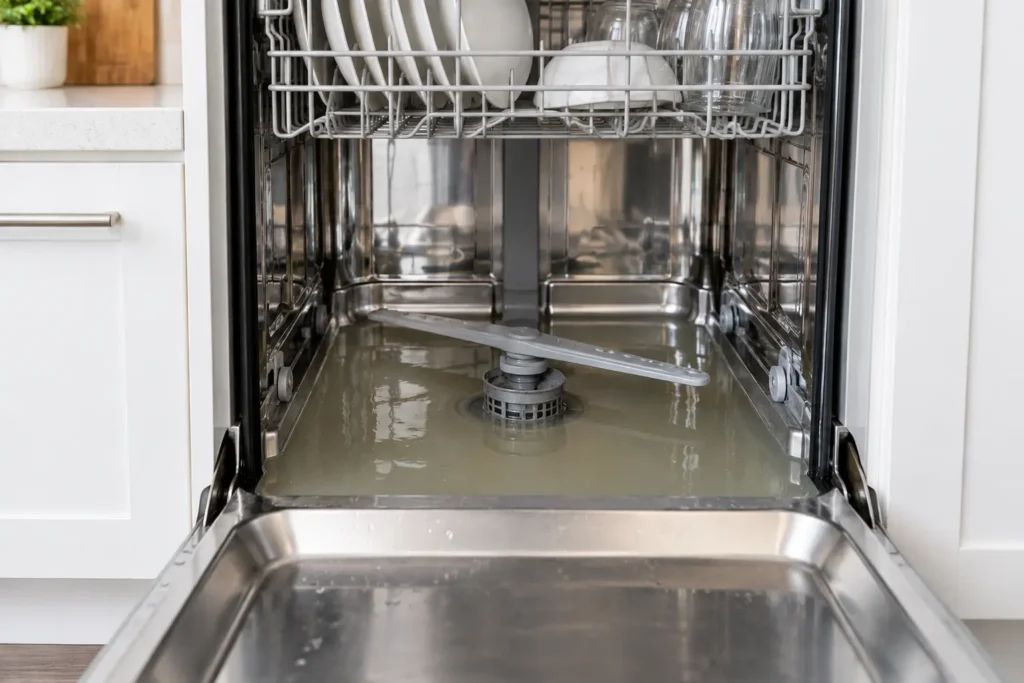
Why Is My Dishwasher Not Draining?
Find out what causes standing water and drainage problems, from clogged filters and drain hoses to pump failures.