Oven & Range Troubleshooting
& Repair Guides
Find answers to common oven and range problems, understand how your appliance works, and learn what may be causing heating, ignition, temperature, burner, and electrical issues. Explore troubleshooting guides, error codes, maintenance tips, and technical insights from appliance repair professionals.
On This Page
- How an Oven & Range Works
- Electric Oven Heating System
- Gas Oven Ignition System
- Temperature Control & Sensors
- Convection & Oven Airflow
- Electric Cooktop Heating
- Gas Cooktop & Ignition
- Oven Door & Heat Retention
- Door Lock & Self-Clean System
- Power Supply & Connections
- Electronic Control System
- Common Oven & Range Problems
- Understanding Error Codes
- Repair or Replace?
- Oven & Range Maintenance
- Troubleshooting Overview
Understanding Your Oven & Range: How It Works and Why Problems Occur
An oven and range may appear relatively simple: select a temperature, turn on a burner, and the appliance produces heat. Inside, however, several electrical, mechanical, gas, temperature-control, and safety systems must work together for the appliance to operate correctly.
The exact components depend heavily on whether the appliance is electric or gas. Electric ranges generate heat through resistance heating elements, while gas models use burners, igniters, valves, and controlled gas flow.
Modern ovens also rely on temperature sensors and electronic controls to regulate heat throughout the cooking cycle.
Understanding how these systems work can make common symptoms easier to interpret. An oven that does not heat at all, for example, points toward a different group of possible problems than an oven that heats but consistently cooks food at the wrong temperature.
This guide explains the major systems inside household ovens and ranges, how they work together, and why common cooking and heating problems develop.
How an Oven & Range Works
A range usually combines two cooking systems in one appliance:
The cooktop provides direct heat for pots and pans.
The oven creates a controlled heated environment for baking, roasting, broiling, and other cooking functions.
Although both systems generate heat, they do not necessarily use the same components.
A simplified oven process looks like this:
Cooking mode selected → Control system receives temperature setting → Heating system activates → Temperature sensor monitors oven → Control cycles heat as needed → Selected temperature is maintained
The cooktop operates differently.
Depending on the appliance, turning on a surface control may energize an electric heating element or initiate the ignition sequence for a gas burner.
Modern ranges may also include convection fans, warming zones, temperature probes, multiple heating elements, touch controls, and electronically regulated burners.
Because the oven and cooktop share some electrical and control components but use different heating systems, one part of the range can sometimes work normally while another does not.
Let’s look at the major systems separately.
1. Electric Oven Heating System
Electric ovens generate heat by passing electrical current through resistance heating elements.
Most conventional electric ovens use at least two primary elements:
- bake element
- broil element
The bake element provides much of the heat used during normal baking.
The broil element, usually located near the top of the oven cavity, produces intense radiant heat for broiling and may also operate during certain bake cycles.
Some models use additional heating elements for convection or other cooking modes.
The basic process is:
Control Board → Relay → Heating Element → Heat Inside Oven
Electric heating elements operate at very high temperatures and repeatedly expand and contract as they heat and cool.
Over time, an element can weaken, crack, blister, or fail electrically.
A failed element can cause several different symptoms depending on how the oven is designed.
The oven may:
- not heat at all
- heat very slowly
- fail only during bake
- fail only during broil
- cook food unevenly
- struggle to reach the selected temperature
However, a heating element is only one part of the circuit.
A good element will not heat if it does not receive the correct electrical supply. Relays, wiring, terminal connections, temperature controls, and the incoming power supply can all prevent normal operation.
Related guide: Electric Oven Not Heating? Common Causes and What to Check →
2. Gas Oven Ignition System
Gas ovens produce heat through combustion rather than electrical resistance.
The heating sequence is more complex because gas must be released and ignited safely.
Many modern gas ovens use a hot-surface igniter.
A simplified ignition sequence is:
Control Requests Heat → Igniter Energizes → Igniter Heats → Gas Safety Valve Opens → Gas Reaches Burner → Burner Ignites
The igniter plays an especially important role.
It does more than simply provide a source of ignition. In many oven designs, the igniter must draw sufficient electrical current before the gas safety valve will open.
An igniter can therefore glow visibly and still be too weak to operate the system correctly.
Possible ignition-system components include:
- bake igniter
- broil igniter
- gas safety valve
- burner assembly
- wiring
- control board
- temperature sensor
A weak igniter may cause delayed ignition, long preheat times, intermittent heating, or complete failure to ignite.
Because gas and electricity work together in this system, observing a glowing igniter does not by itself confirm that the ignition system is functioning correctly.
Related guide: Gas Oven Not Heating? Igniter, Gas Valve and Other Common Causes →
3. Oven Temperature Control and Sensors
An oven must do more than generate heat.
It also has to maintain the selected cooking temperature.
Modern ovens commonly use an electronic temperature sensor located inside the oven cavity.
As the oven temperature changes, the electrical resistance of the sensor changes. The control board interprets that information and determines when the heating system should turn on or off.
The basic control process is:
Temperature Selected → Sensor Measures Oven Temperature → Control Compares Actual vs. Target Temperature → Heating Cycles On or Off
Oven temperature does not remain perfectly constant.
During normal operation, the temperature rises and falls around the selected setting as the heating system cycles.
What matters is whether the average cooking temperature remains within the expected range.
Temperature problems can develop when:
- the sensor provides inaccurate information
- the sensor is damaged or out of position
- a heating element is weak or failed
- an igniter does not operate correctly
- the control board cycles heat incorrectly
- airflow inside the oven is disrupted
- the door does not seal properly
This is why an oven that reaches 350°F momentarily is not necessarily maintaining 350°F correctly throughout the cooking cycle.
The pattern over time matters more than a single temperature reading.
Related guide: Oven Temperature Is Wrong? Common Causes and Calibration Issues →
4. Convection and Oven Airflow
Many modern ovens use convection to circulate heated air through the oven cavity.
A convection fan helps distribute heat around the food, which can improve cooking consistency and reduce temperature differences within the oven.
Depending on the design, a convection system may include:
- convection fan motor
- fan blade
- convection heating element
- fan cover
- temperature sensor
- electronic controls
Not every convection oven uses a dedicated convection element.
Some models circulate heat generated by the standard bake and broil elements, while others use an additional heating element around or near the fan.
What happens when convection airflow is disrupted?
The oven may still produce heat.
However, you may notice:
- uneven cooking
- longer cooking times
- poor browning
- unusual fan noise
- fan not running when expected
Cookware placement also affects airflow.
Large pans, crowded racks, and foil positioned incorrectly inside the oven can interfere with normal heat circulation.
An uneven-cooking complaint therefore does not always indicate a failed component.
Related guide: Oven Not Heating Evenly? Common Causes and What to Check →
5. Electric Cooktop Heating System
Electric ranges use one or more types of surface heating elements.
Depending on the design, the cooktop may use:
- exposed coil elements
- radiant elements beneath a glass surface
- dual or triple-zone elements
- warming elements
Traditional coil elements plug into receptacles and heat when electrical current passes through their resistance wire.
Smooth-top ranges typically use radiant heating elements beneath a ceramic-glass surface.
The control system regulates how much heat the surface element produces.
On some ranges this is done with an infinite switch. More advanced models may use electronic controls and relays.
A surface burner that does not heat can involve:
- failed element
- damaged element receptacle
- failed infinite switch
- burned wiring
- loose connection
- control board or relay problem
- electrical supply issue
A burner that remains on high regardless of the setting suggests a different diagnostic path than a burner that does not heat at all.
The behavior of the element is therefore an important clue.
Related guide: Electric Stove Burner Not Heating? Common Causes Explained →
6. Gas Cooktop Burner and Ignition System
Gas cooktop burners require the correct mixture of gas and air plus a reliable ignition source.
When a burner knob is turned to the ignition position, the spark system produces a high-voltage spark near the burner.
At approximately the same time, the gas valve allows gas to flow to the burner.
The basic process is:
Knob Turned → Gas Valve Opens → Spark Igniter Fires → Gas Reaches Burner → Flame Ignites
Common components include:
- burner head
- burner cap
- spark electrode
- ignition switch
- spark module
- gas valve
- wiring
Food residue, grease, moisture, or incorrect burner-cap placement can interfere with ignition even when the electrical components are functioning normally.
A burner that clicks but does not ignite therefore does not automatically have a bad spark module.
The spark may be present while gas flow or burner alignment is the actual problem.
Similarly, a burner may ignite but produce an uneven or abnormal flame if burner openings are dirty or components are not positioned correctly.
Related guide: Gas Stove Burner Won’t Ignite? Common Causes and What to Check →
7. Oven Door, Gasket and Heat Retention
The oven door is part of the heating system.
Once heat is produced, the oven needs to retain enough of it to maintain the selected temperature efficiently.
The door gasket helps reduce heat loss around the oven opening.
Other important components may include:
- door hinges
- hinge springs
- door gasket
- inner and outer door panels
- glass panels
- door latch
If the door does not close correctly, heat can escape continuously.
Possible symptoms include:
- long preheat times
- difficulty maintaining temperature
- uneven cooking
- excessive heat around the front of the appliance
- increased cooking time
A damaged gasket can contribute to heat loss, but not every visible gap indicates a problem. Oven door seals vary by design, and some models intentionally have areas where the gasket does not form a continuous loop.
Door alignment is also important.
Worn or damaged hinges can prevent the door from closing completely even when the gasket itself is in good condition.
8. Oven Door Lock and Self-Clean System
Many ovens use a motorized door-lock mechanism during the self-clean cycle.
Self-cleaning temperatures can be much higher than normal baking temperatures, so the oven must prevent the door from being opened while unsafe temperatures are present.
The system may include:
- door lock motor
- latch mechanism
- lock switches
- temperature sensor
- thermal protection devices
- control board
The control needs to know whether the door is locked or unlocked.
If the expected position cannot be confirmed, the oven may display an error code or refuse to begin certain functions.
Problems can also occur after a self-clean cycle.
The door may remain locked if the latch mechanism, sensor, wiring, or control system does not return to its normal state.
Because self-cleaning places the oven under unusually high thermal stress, existing weaknesses in electrical connections or components may sometimes become apparent during or after the cycle.
9. Power Supply and Electrical Connections
Electric ovens and ranges require substantially more electrical power than many other household appliances.
Most full-size electric ranges in the United States operate on a 240-volt supply.
The appliance receives power through two hot legs of the electrical circuit.
This creates an important troubleshooting situation.
A range can sometimes have enough electrical power for the display, lights, or certain controls to operate while the heating system does not function normally.
Possible electrical problems include:
- tripped circuit breaker
- partial loss of the 240V supply
- damaged power cord
- burned terminal block
- loose electrical connection
- damaged wiring
High-current connections deserve particular attention.
A loose connection can generate significant heat and damage terminals, wiring, or the terminal block.
If an electric oven suddenly stops heating while the display still works, the incoming power supply should not be overlooked.
The problem may be outside the oven’s heating elements or electronic controls.
10. The Electronic Control System
Modern ovens and ranges use electronic controls to coordinate cooking functions.
Depending on the appliance, the control system may manage:
- bake element
- broil element
- convection system
- gas ignition
- oven temperature
- surface elements
- timers
- temperature probe
- door lock
- cooling fans
- user interface
The main control board receives information from sensors and user selections and then activates relays or other electronic devices to control the appropriate loads.
For example:
Bake Selected → Control Checks Sensor → Bake Circuit Activated → Oven Heats → Sensor Reports Temperature → Control Cycles Heat
A failed relay can prevent a heating element from receiving power even when the element itself is good.
Burned connectors, damaged wiring, cracked solder joints, or failed electronic components can produce similar symptoms.
This is why a control board should generally not be replaced simply because an oven is not heating.
The heating circuit and its inputs should be tested first.
How Common Oven & Range Problems Develop
Oven and range problems become easier to understand when the appliance is divided into its basic functions.
The appliance must:
- receive the correct electrical or gas supply
- generate heat
- ignite gas safely where applicable
- monitor temperature
- distribute and retain heat
- respond correctly to user controls
A failure in one function can sometimes make another system appear defective.
For example, an electric oven with a partial power-supply problem may have a working display but no heat.
A gas oven with a weak igniter may appear to have a gas-valve problem.
An oven with a damaged door seal may generate heat normally but struggle to maintain temperature.
The exact symptom and the type of appliance are therefore important starting points.
Oven Not Heating
An oven that does not heat requires different troubleshooting depending on whether it is electric or gas.
Electric Oven
Possible problem areas include:
- bake element
- broil element
- 240V power supply
- control relay
- temperature sensor
- wiring
- terminal connections
One useful question is whether both bake and broil have stopped working.
If both functions fail at the same time, a shared power or control problem may become more significant than two heating elements failing simultaneously.
Gas Oven
Possible causes include:
- weak or failed igniter
- gas safety valve
- burner problem
- control board
- temperature sensor
- wiring
- gas supply
Observing what happens when Bake is selected can provide useful information.
Does the igniter glow?
Does the burner ignite?
Does ignition take unusually long?
Does the burner light and then shut off unexpectedly?
These behaviors help narrow the diagnostic path.
Detailed troubleshooting: Oven Not Heating? Common Causes for Gas and Electric Ovens →
Oven Takes Too Long to Preheat
Preheating speed depends on oven design, selected temperature, room conditions, and which heating components operate during preheat.
A noticeable increase in preheat time can indicate a developing problem.
Possible causes include:
- failed bake or broil element
- weak gas igniter
- temperature sensor problem
- incorrect voltage
- heat loss through the door
- control problem
Some ovens use multiple heating components during preheat and then change their operation once the target temperature is reached.
If one of those components stops working, the oven may still eventually become hot enough to cook but take much longer than normal.
This is why a slow-preheat complaint can sometimes reveal a partial heating failure before the oven stops heating completely.
Oven Temperature Is Incorrect
An oven that is too hot, too cool, or inconsistent can have several possible causes.
Before diagnosing a failure, it is important to understand normal temperature cycling.
An oven does not typically hold one exact temperature continuously.
Instead, the temperature rises and falls around the selected setting.
A single thermometer reading may therefore be misleading.
Potential causes of a genuine temperature problem include:
- inaccurate temperature sensor
- heating element problem
- weak gas igniter
- control calibration
- control board fault
- door sealing problem
- convection or airflow issue
Some ovens allow a temperature offset or calibration adjustment through the control settings.
Calibration can correct a relatively consistent temperature difference.
It cannot compensate for a failed heating component or an oven whose temperature fluctuates abnormally.
Related guide: Oven Temperature Is Wrong? How to Identify the Cause →
Oven Is Not Heating Evenly
Uneven cooking can occur even when the oven reaches the selected temperature.
Heat distribution depends on several factors.
Possible causes include:
- failed bake element
- failed broil element
- convection fan problem
- temperature sensor issue
- damaged door gasket
- incorrect rack position
- blocked airflow
- cookware placement
A burned bottom with an undercooked top, for example, can provide different clues than food that consistently cooks faster on one side of the oven.
Before assuming the oven has failed, cookware and rack placement should also be considered.
Large baking sheets can block airflow, and overcrowding the oven can interfere with normal heat circulation.
If the cooking pattern changes suddenly despite using the same cookware and recipes, a heating or airflow component becomes more significant.
Related guide: Oven Not Heating Evenly? Common Causes Explained →
Stove Burner Not Heating or Igniting
Cooktop problems should first be separated by energy source.
Electric Burner
If one electric burner does not heat, the problem may involve the element, receptacle, switch, wiring, or electronic control.
If multiple burners fail simultaneously, a shared electrical supply or control problem may be more likely.
Gas Burner
If a gas burner does not ignite, observe whether the igniter is sparking.
A visible spark means part of the ignition system is operating, but proper gas flow and burner condition are still required.
Food debris, moisture, or a misaligned burner cap can prevent normal ignition.
If there is no spark at all, the electrode, ignition switch, spark module, wiring, or electrical supply may need to be considered.
The distinction between no gas, no spark, and spark but no ignition can significantly narrow the diagnosis.
Oven Won't Turn On
An oven that appears completely unresponsive requires a different diagnostic approach from an oven whose display works but heating does not.
If there is no display, light, or control response, possible areas include:
- circuit breaker
- electrical outlet or supply
- power cord
- terminal block
- internal fuse or thermal protection
- wiring
- control board
If the display works but the oven will not begin a cooking cycle, the issue may instead involve:
- control settings
- door lock status
- temperature sensor
- heating circuit
- control relay
- user interface
Some ovens also have control-lock or Sabbath functions that can change normal operation.
Before assuming an electronic failure, the selected settings and display messages should be checked.
Related guide: Oven Won’t Turn On? Power, Controls and Common Causes →
Understanding Oven & Range Error Codes
Modern ovens and ranges can monitor many electrical and temperature-related conditions.
When the control detects an unexpected signal, it may display an error or fault code.
Depending on the manufacturer, error codes may relate to:
- oven temperature sensor
- overheating
- control board
- keypad or user interface
- door lock
- communication between electronic modules
- cooling fan
- heating circuit
An error code can significantly narrow the area that needs to be inspected.
It does not always identify the failed component directly.
A temperature-sensor code, for example, could indicate a failed sensor, but damaged wiring or a poor electrical connection may produce a similar reading at the control board.
Likewise, a door-lock code can involve the latch mechanism, switch, motor, wiring, or electronic control.
Error codes should therefore be used as diagnostic information rather than automatic instructions to replace a specific part.
Repair or Replace Your Oven or Range?
Ovens and ranges often have relatively long service lives, and many common failures can be repaired without replacing the entire appliance.
Whether repair makes sense depends on several factors:
- appliance age
- overall condition
- type of failure
- repair cost
- previous repair history
- availability of replacement parts
- condition of the cooktop and oven cavity
- cost of a comparable replacement appliance
A failed heating element, igniter, sensor, switch, or other replaceable component may make repair straightforward.
Multiple major failures, structural damage, unavailable parts, or extensive electronic problems can change the calculation.
The diagnosis should come before the repair-or-replace decision.
An oven that does not heat could have a relatively simple failed igniter or element — or a more involved power, wiring, or control problem.
Knowing the actual cause allows repair cost and appliance value to be compared meaningfully.
Basic Oven & Range Maintenance Can Prevent Many Problems
Ovens and ranges do not require extensive routine maintenance, but a few practices can help prevent avoidable problems.
Keep cooktop burner areas reasonably clean.
On gas ranges, make sure burner caps are correctly positioned after cleaning.
Avoid allowing food residue to accumulate around gas burner openings and ignition electrodes.
Clean spills inside the oven after the appliance has cooled, following the manufacturer’s recommendations.
Do not line areas of the oven with foil unless the manufacturer specifically allows it. Incorrectly placed foil can interfere with airflow, trap heat, or damage oven surfaces.
Check that the oven door closes normally and avoid placing excessive weight on an open door.
Pay attention to changes in normal operation.
Longer preheat times, repeated ignition clicking, uneven flames, new electrical smells, unusual noises, inconsistent temperatures, or visibly damaged heating elements can indicate a developing problem.
Addressing the cause early can sometimes prevent additional damage.
Understanding the System Makes Oven & Range Troubleshooting Easier
An oven and range become easier to diagnose when each cooking function is considered separately.
The electric heating system converts electrical energy into heat.
The gas ignition system safely ignites and controls the burner flame.
The temperature sensor and control system regulate oven temperature.
The convection system distributes heated air.
The cooktop system provides direct surface heat.
The door and gasket help retain heat inside the oven.
And the electronic controls coordinate the appliance’s different functions.
When a problem develops, the first questions are often simple:
Is the appliance gas or electric?
Is the problem with the oven, cooktop, or both?
Does the appliance produce any heat?
Does a gas igniter glow or spark?
Does an electric range have the correct power supply?
Does the oven reach temperature but fail to maintain it?
Those distinctions can quickly narrow the number of systems that need to be investigated and help separate basic operating issues from failures requiring electrical testing, component-level diagnosis, or professional service.
On This Page
- How an Oven & Range Works
- Electric Oven Heating System
- Gas Oven Ignition System
- Temperature Control & Sensors
- Convection & Oven Airflow
- Electric Cooktop Heating
- Gas Cooktop & Ignition
- Oven Door & Heat Retention
- Door Lock & Self-Clean System
- Power Supply & Connections
- Electronic Control System
- Common Oven & Range Problems
- Understanding Error Codes
- Repair or Replace?
- Oven & Range Maintenance
- Troubleshooting Overview
Oven Repair Throughout the Denver Metro Area
Need Professional Oven Repair?
If your oven isn’t heating properly, won’t reach the set temperature, heats unevenly, or stops working, the problem may require professional diagnostics.
Mint Appliance Repair provides professional oven diagnosis and repair throughout the Denver metro area.
Same-day appointments
Upfront pricing
90-day warranty on parts and labor
Denver metro experts
BROWSE APPLIANCE REPAIR GUIDES
REFRIGERATOR
Cooling problems, ice makers, compressors, defrost systems & error codes
WASHER
Drainage, spinning, leaks, vibration & electronic faults
DRYER
Heating problems, airflow, thermostats, belts & sensors
OVEN & RANGE
Heating elements, igniters, temperature issues & control boards
DISHWASHER
Drainage, cleaning, leaks, pumps & heating problems
ERROR CODES
Error codes, fault codes & diagnostic information
APPLIANCE ERROR CODES & DIAGNOSTICS

TROUBLESHOOTING BY PROBLEM
- Refrigerator Not Cooling
- Dishwasher Not Draining
- Washer Won’t Drain
- Appliance Making Noise
- Dryer Not Heating
- Appliance Leaking Water
- Oven Not Heating
- Appliance Won’t Turn On
FEATURED REPAIR GUIDES
Why Is My Refrigerator Not Cooling?
Common causes include dirty condenser coils, failed fans, defrost problems, sensors, and sealed-system failures.
Why Won’t My Washer Drain?
Learn what causes drainage issues and how to diagnose pumps, hoses, and filters.
Why Is My Dryer Not Heating?
Find out the most common reasons why your dryer doesn’t heat and how to fix them.
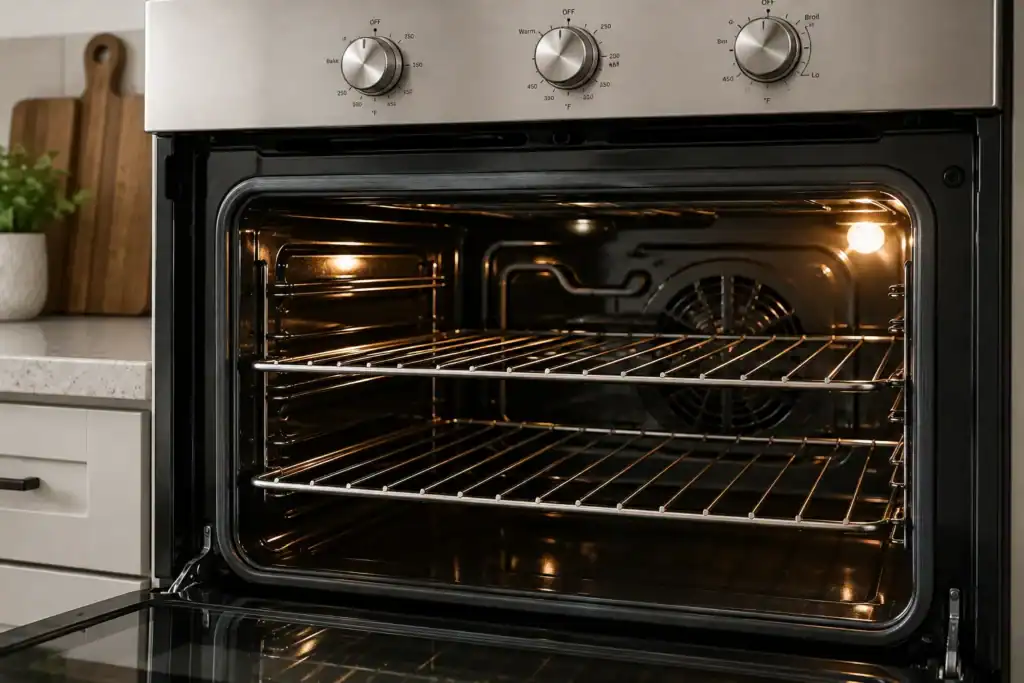
Oven Not Heating? Top 6 Causes
From bad igniters to control boards—here’s how to identify the problem.